CENTRE FOR ECONOMIC DEVELOPMENT AND ADMINISTRATION (CEDA)
Tribhuvan UniversityKirtipur, Kathmandu
Kirtipur, Kathmandu
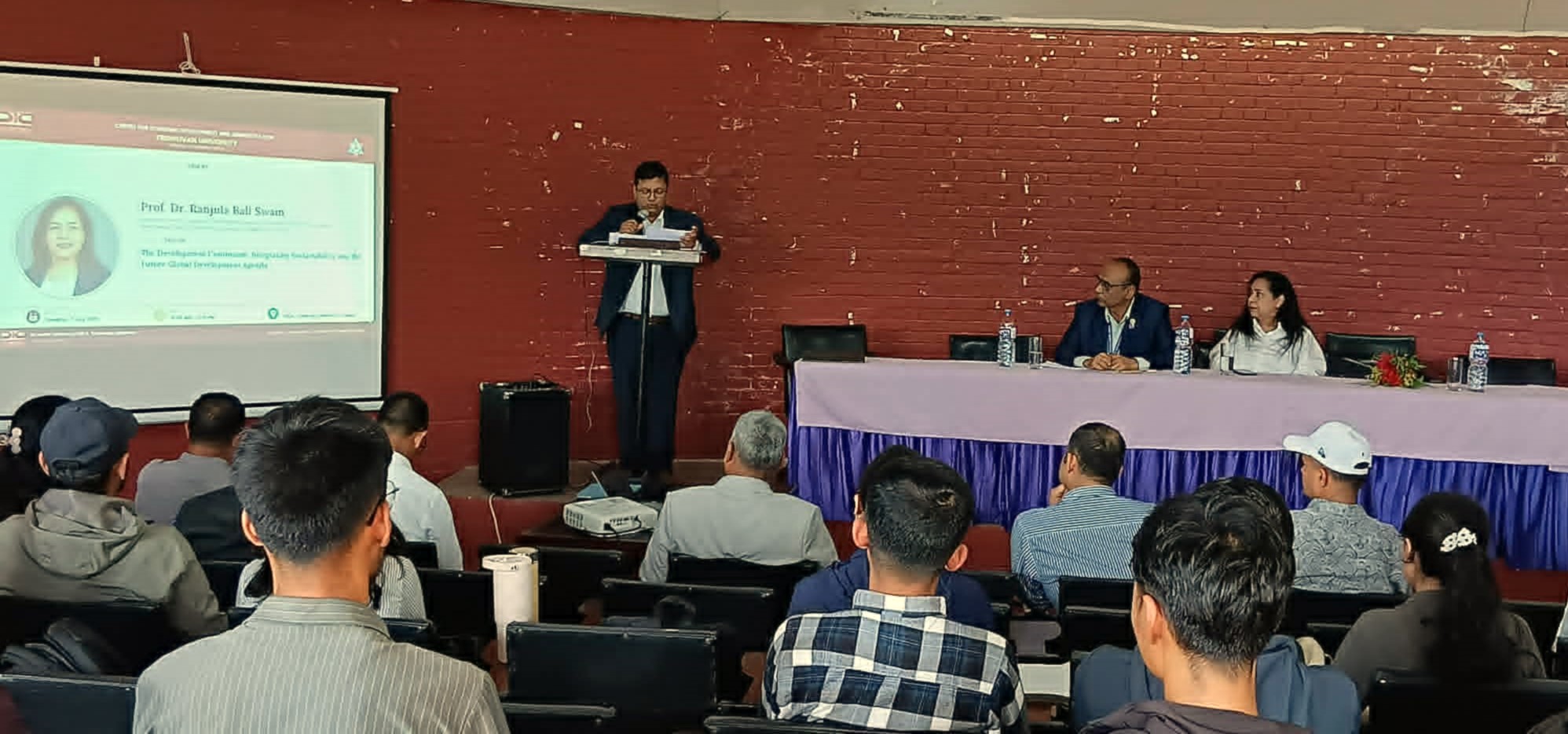
The Centre for Economic Development and Administration (CEDA), Tribhuvan University, successfully hosted a Guest Talk Series on "The Development Continuum: Integrating Sustainability into the Future Global Development Agenda" on Tuesday, 7 July 2026. The lecture was delivered by Prof. Ranjula Bali Swain, Research Director at the Center for Sustainability Research, Stockholm School of Economics, and Professor and Head of the Department of Economics at Södertörn University, Sweden. An internationally renowned economist, her expertise spans sustainable development, sustainable finance, artificial intelligence, and energy economics.
In her lecture, Prof. Swain traced the evolution of global development from the human development paradigm to sustainability and climate action. Drawing on evidence from 2000–2019, she emphasized integrating sustainability into the post-2030 global development agenda, discussed its implications for South Asian countries, including Nepal, and highlighted the importance of balancing economic growth, social inclusion, and environmental sustainability.
The event was attended by policymakers, CEDA researchers, faculty members, students of the Central Department of Economics, Tribhuvan University, and participants from the wider academic community. The engaging presentation and interactive question-and-answer session fostered meaningful discussions on the future of sustainable and inclusive development.
On behalf of the CEDA family, Dr. Ram Kumar Phuyal (Expert-Professor/Researcher of CEDA, and Former Member of National Planning Commission, Government of Nepal), moderated the program, while Prof. Arjun Kumar Baral, Executive Director of CEDA, chaired the session and concluded the event with a vote of thanks.
CEDA expressed sincere appreciation to Prof. Swain for sharing her invaluable knowledge, global experience, and scholarly insights. Her thought-provoking lecture significantly enriched academic discourse at CEDA, stimulated meaningful discussions among faculty members, researchers, and students, and inspired deeper reflection on the future of sustainable and inclusive development.